





















Trending Topics

Scientists turning Mxene into tiny nanoscrolls to supercharge batteries and sensors
Scientists created nanoscrolls that boost performance in batteries, sensors, and wearable devices by rolling 2D MXene into tiny conductive tubes. That sounds incredible! What are your views on this?
Apple iRing is likely to come with health and fitness-tracking sensors.
It is rumoured that Apple is gearing up to launch its smart ring with health and fitness tracking sensors. Leaks also suggest that this ring is a possible competitor for the Oura Ring series and Samsung Galaxy Ring. What are your views on this?

Microsoft piloting a wearable AI access badge with built in biometric sensors
Wearable gadgets are revolutionising. Earlier, it was worn by Microsoft employees, but now, Microsoft is aiming to bring it to every office desk. I believe this is surely going to improve AI-based work.

Does Anyone Actually Prefer One Great Zoom Camera Over Multiple Telephoto Sensors?
Find X10 Pro M leaks suggest brands may continue focusing on a single high-resolution periscope camera rather than using several telephoto lenses.

Stop putting 2MP macro sensors on 40k phones
Interestingly, smartphone makers are using 2MP macro sensors to complete their camera setups on 40k phones. But, is it really that useful?
Are companies stuffing too many sensors and features into flagships that most people never use?
There is a popular argument going on that companies are using too many sensors. Or is it just a hype? In my opinion, many users don’t even use this feature, nor do they understand it. It becomes useless to them. What are your opinions on this?
Phones with 1-inch camera sensors can make photos better, or just a marketing stunt?
As a professional photographer, I pick a DSLR for better picture quality. Moreover, I am a wildlife photographer and need to shoot night photos and capture animals with fine details and textures. Sometimes I need to shoot on the spot, so I can’t wait to take my DSLR out of the bag and click. I’ve seen smartphones with a 1-inch sensor feature used by my fellow photographer. How does it benefit in improving the image texture?
I started seeing the latest air purifier launches just when pollution season started becoming real again
The newer models have smarter sensors and extra features, but I mainly need something reliable for one bedroom.
Phone cameras keep adding more lenses every year. Does having more cameras actually help?
Some phones have two cameras while others have three or four, but I am not sure how much difference those extra sensors make in normal use.
Which Microwave feature is useful for daily life?
Do smart microwave features like auto-cook menus, humidity sensors, and child lock actually make cooking easier, or do you still prefer using manual settings? Which feature do you think is the most useful in daily life?

Samsung using Galaxy Watch to predict fainting
This summer, stress and dehydration are becoming common and leading to frequent fainting or blackouts. To combat this, Samsung has recently announced a fainting prediction through Galaxy Watch sensors. The wearable is going beyond just counting steps and tracking sleep. Not only this, A doctor has validated its ability to treat VVS (Vasovagal syncope). It can analyze heart rate variable data and later can be applied to an AI algorithm.
Are Smart Rings finally replacing fitness bands in your social circle?
Which one is smarter: Smart Rings or Smartwatches? I’m seeing more people wearing rings than watches lately. Is it just a fashion trend, or are the sensors actually catching up to the Apple Watch?
Is it better to buy a fitness band or a smartwatch in 2026?
Most of the smartwatches are already equipped with fitness tracking abilities, like heart rate sensors, built-in GPS, and health tracking. I have seen many people wearing fitness bands while working out. What’s better? Does a fitness band really make a difference, or is a smartwatch enough? Any comments?

Which is better? Le 1s or iPhone SE?
Apple announced the iPhone SE and the web is going wild about it! The Verge says "The new iPhone SE finally makes a small phone feel powerful", TechRadar says that its "Small but mighty!" and The Telegraph calls it "Apple's secret weapon". Lots of superlatives are being thrown around, as is always the case with Apple products. So, in the midst of Apple's reality distortion field, I decided to compare it to my Le 1s - that I've been using for more than a month now. The results, at least for me, are very conclusive.

Let's start with the OS. Android and iOS are now at-par on features, freely taking inspiration from each other and the perennial also-ran Windows Phone. However, if you've been using an Android phone, the move to iOS is jarring regardless of preparation. Trust me, having moved from a OnePlus 2 to an iPhone 6S, I know this better than most. If you're an iPhone user already, there is no discussion required. If you're an Android user, then I'd say "Don't even consider an iPhone!"
Moving on to design and build, the new iPhone is, in line with Apple's policy "thinner, smaller and lighter" than the Le 1s. However, the Le 1s has an astounding screen-to-body ratio of 75% that enables single-handed use and the phone doesn't feel too big. After all, within reason, bigger is always better! Both phones offer amazing build quality at their respective price points, so that's not really much of a contest.
On display, if you like smaller screens, the iPhone SE will appeal to you. But for someone who has used a 4+ inch screen device earlier, going back to a smaller display doesn't really work. In this respect, the Le 1s scores with its big but not too big display, and its helped by minimal bezels. Resolution-wise, its a no contest with the Full HD In-Cell display on the Le 1s ruling the roost with its fantastic color reproduction, great viewing angles and almost-zero bezels.
On connectivity, both the Le 1s and the iPhone SE are at par with each other on Wi-Fi and Network compatibilities, but the Le 1s scores with its dual-SIM capability.
When it comes to performance, I believe that specs are just one part of the game. Real-world performance is key. And in this area, despite having lesser amount of RAM than the Le 1s, the iPhone SE performs equally well due to better memory management in iOS versus Android. Its a straight tie!
Camera is another key feature where specs are just one part of the game with actual photo clarity being the key identifier. The iPhone SE uses the much-lauded camera module from the iPhone 6S, so its a given that photos will come out well. The Le 1s on the other hand had a few initial hiccups with photo clarity but they've since been resolved by OTA updates, so overall - its a good camera experience on both smartphones. The Le 1s scores in lowlight clarity and front-camera! Apple, for reasons that defy logic, went with a 1.2MP sensor on the front-camera. Now megapixels might not be everything, but with a 5MP sensor, the Le 1s handily beats the iPhone SE on selfies. Another reason is the smaller aperture size on Le 1s cameras – both front and rear (f2.0) compared to the iPhone SE which has f2.4 on the front camera and f2.2 on the rear camera – in photography parlance, smaller is referred to as “wider”. A wider aperture lets in more light which gives better photos in low-light and indoor situations, and gives you that beautiful blurred “out of focus” effect on wide shots.
With respect to sensors, the Le 1s has an infrared sensor to control home appliances that the iPhone doesn't. Everything else on this front is a tie.
Finally, the "essential spec" in today's world, battery! The Le 1s has almost double the battery capacity of the iPhone SE, with fast-charge built-in! While iOS has better power management than Android, the huge difference in capacity should result in longer standby times with the Le 1s!
Regardless of all technical specifications and performance comparisons, there will still be people convinced that an Apple product is the next best thing since sliced bread! So, to those people, here is a final nail in the coffin. Both the Le 1s and iPhone SE are good phones that do almost everything you can expect them to. Most importantly for a budget-conscious Indian, the Le 1s costs INR 10,999 while the iPhone SE starts at a whopping INR 39,000! That’s three times more expensive than the Le 1s!!! Case closed.

Science With Samsung:Contact lenses with a built-in camera
Into science fiction,Samsung just took another step. S. Korea has just granted the tech giant Samsung a patent for contact lenses with a display(Camera) that can project images straight into the user’s eye. The news comes from a Samsung-centric blog SamMobile Working Strategies: It expected and seems that Samsung is developing the smart contact lenses as an alternative to creating improved augmented reality experiences over the current crop of wearables,:Reported by SamMobile. With contact lenses instead of glasses, users will be able to enjoy augmented reality content more discreetly. Blinking to control an ocular interface may lead to a lot of awkward situations and accidental input, but it’s not entirely unrealistic.
Lenses are equipped with a built-in camera and sensors that can be controlled simply by blinking. Content is sent to your smartphone through embedded antennas. This is where the data is processed.
Grateful and Thankfully, there’s always the option of controlling the interface through your smartphone.

7 popular mid range smartphones comparison in 2016
The Youtube channel "Geek Love" has performed a comparison between 7 popular mid range smartphones: These phones share some similar specifications, as they all have the MT6753 chip, 3GB of RAM, 13MP&5MP cameras. In this video, we see comparisons about: You can see the whole test in the video below but meanwhile we did a small comparison chart so you can see all details faster:
Jiayu S3+
Doogee F5
Ulefone power,
Oukitel K6000 Pro
Leagoo Elite 1
Umi touch
Elephone P8000
Design–Back cover & frame materials, buttons
Display–Brightness, color temperature
Screens–Anti-fingerprint coating
Software–OS
Battery–Battery life, battery capacity
Quick charging–Input power
Hardware–Sensors, Storage
Performance–Antutu scores
Oukitel K6000 Premium Leaks - 6GB Of RAM, 6,000mah Battery, Touch ID
According to the source in Oukitel, they are going to have a new device named OUKITEL K6000 Premium in next few months. Oukitel redesign the appearance of K6000 Premium to make the phone a true premium piece. We’re talking about Oukitel K6000 Premium which will feature 6GB of RAM and 32GB of internal storage according to our source at the company. According to the info, this handset will sport a curved glass back, and will ship with a 13-megapixel camera on both its back and front side. Sony’s IMX258 13-megapixel sensor will be utilized on the device’s back, and we still don’t know which sensor will be used up front (quite probably one of OmniVision’s sensors), but we do know that the company will include a front-facing LED flash here as well. Anyway, the dual 13MP cameras are very attractive for those who like selfies. Besides, the K6000 Premium will carry a curved glass-smooth back cover like Samsung Galaxy S7, a 5.5-inch AMOLED FHD display, Helio X20 chip set clocked at 2.5GHz, Android 6.0 OS, fingerprint sensor and Hi-Fi audio. Those all seems amazing, but don't know when it is available and what the price is. Source: androidheadlines.com

OUKITEL K6000 Pro Smartphone Parameter Revealed - 6000mAh, Android 6.0, 3GB RAM
Chinese phone manufacturer (OUKITEL) released a new phone - OUKITEL K6000 Pro with 6000mAh battery, Android 6.0 OS, fast charging and 3GB + 32GB storage. It is said that this phone would on pre-sale at the beginning of April and be available at the end of April. Check out the full and newest parameter of it.

Brand: Oukitel
Model: K6000 Pro
Color: Silver/Grey
Dimensions: 10x76.7x154.3 mm
Weight: 213.88g (Build-in Battery)
Operating System: Android 6.0
Fingerprint ID: unlock in 0.3 second
CPU: 64 bit Octa core MT6753
GPU: Mali-T720 GPU
RAM: 3GB LPDDR3
ROM: 32GB, TF card support up to 32GB
Battery: SCUD 6000mAh Lithium Polymer
Talk time: 46 hours
Music: 45 hours
Videos: 10 hours
Charger: MTK Pump Express Flash Charging
5V/7V/9V-2A Intelligent flash charge
Display:
Size: 5.5 inch
Resolution: FHD 1920x1080 pixels
Type: LTPS 2.5D
Material: Dragontrail X
Camera:
Rear camera: 13MP, Front camera: 5MP
Rear camera: 16MP, Front camera:8MP(Interpolated)
F2.0 Aperture, Dual Flash
Video: 1080P
Connection:
Network: GSM: 850/900/1800/1900 (Band5, Band8, Band3, Band2)
WCDMA: 900/2100 (Band8, Band1)
FDD: 800/1800/2100/2600 (Band20 , Band3, Band1, Band7)
SIM: Dual SIM dual standby
Wifi: Support
Bluetooth: Bluetooth 4.0
Positioning: GPS, A-GPS, GLONASS
Sensors: G-sensor, Light sensor, Proximity sensor, Hall Effect sensor
Functions: FM radio, OTG, Hotknot, Miracast, Off-screen gesture, Super power saving mode

How to Recover Deleled Photos from Samsung S7/S7 Edge
The Samsung Galaxy S7 Edge is a dual SIM (GSM and GSM) smartphone Connectivity options include Wi-Fi, GPS, Bluetooth, NFC, 3G, 4G (with support for Band 40 used by some LTE networks in India). Sensors on the phone include Proximity sensor, Ambient light sensor, Accelerometer, and Gyroscope.Â
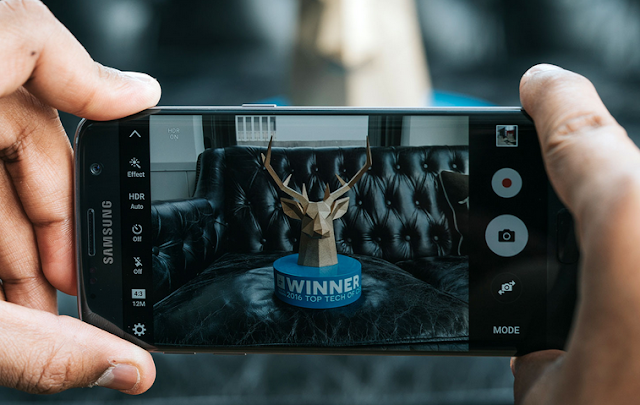
How to Recover Lost/Deleted Photos from Samsung S7/S7 Edge:
We can show you this Samsung Data Recovery which can easily and safely recover delete or lost data including contacts, text messages, videos, photos, call logs, music, whatsapp messages from Samsung Galaxy S7/S7 Edge.
More info:
Method to Recover Deleted Photos from S7/S7 Edge
Â